Context
- The article highlights how climate change is intensifying health risks in India, turning it into a multidimensional public health crisis that goes beyond environmental and economic concerns.
- Source: Climate change as a public health emergency, The Hindu, April 7
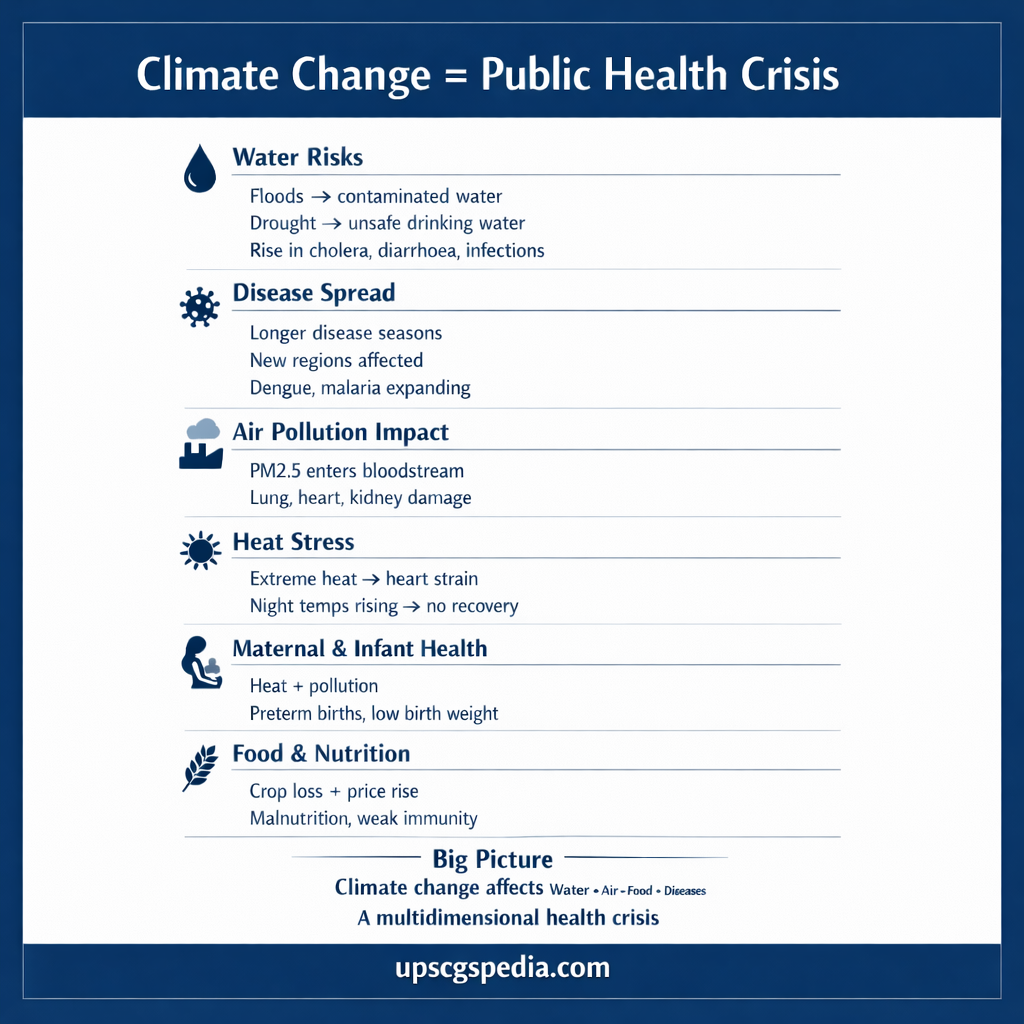
Climate change as a health crisis
- Broader impact: Climate change intensifies existing diseases and creates conditions for new health threats
- Neglected dimension: Public discourse focuses more on environment and economy while overlooking health consequences
Water related health risks
- Urban flooding impact: Recurrent waterlogging in cities like Mumbai leads to contamination and spread of cholera typhoid hepatitis A and leptospirosis
- Sanitation stress: Flooding overwhelms urban sanitation systems increasing exposure to infections
- Drought effects: Water scarcity in drought prone regions forces use of unsafe water raising diarrhoeal diseases and dehydration
Expanding disease patterns
- Seasonal shifts: Changing temperature and rainfall patterns prolong disease cycles and allergy seasons
- Geographic spread: Diseases are expanding into new regions with populations lacking immunity
- Vector borne diseases: Rising temperatures increase mosquito populations expanding diseases like dengue and malaria
- Changing dengue trends: Peak shifting from September to November in Delhi NCR due to extended favourable conditions
- Malaria expansion: Spread to cooler regions such as Himachal Pradesh where it was previously minimal
Air pollution and systemic health impacts
- PM2 point 5 exposure: Fine particulate matter penetrates lungs and bloodstream affecting multiple organs
- Respiratory impact: Causes inflammation reduced lung function asthma and COPD
- Cardiovascular effects: Damages blood vessels increases risk of hypertension heart attack and stroke
- Kidney damage: Long term exposure impairs kidney function and contributes to chronic kidney disease
Heat stress and physiological burden
- Energy demand link: Increased use of air conditioning raises emissions and worsens pollution creating a feedback loop
- Cardiovascular strain: Heat stress forces the heart to work harder increasing risk of hypertension heart attack and stroke
- Vulnerable groups: Outdoor workers and populations without adequate shelter face higher exposure and risks
- Heat stroke trends: Rising cases reported in regions such as Odisha Telangana and Vidarbha
- Night time warming: Reduced cooling period in urban areas like Delhi NCR and Mumbai limits physiological recovery
Impact on infant and maternal health
- Birth outcomes: Exposure to extreme heat and air pollution linked to preterm births and low birth weight
- Vulnerability: Infants face heightened risks due to developing immune and physiological systems
Food security and nutrition impacts
- Agricultural disruption: Extreme weather and unseasonal rains reduce crop productivity and stability
- Nutritional decline: Lower food quality and rising prices increase micronutrient deficiencies and malnutrition
- Livestock impact: Heat stress reduces milk production affecting child nutrition
- Immunity effects: Food insecurity weakens immunity increasing susceptibility to diseases especially among children and elderly
Overall public health implications
- Multidimensional crisis: Climate change affects water health air quality disease patterns and nutrition simultaneously
- Preparedness gap: Health systems in newly affected regions remain underprepared
- Urgency of recognition: Treating climate change as a medical emergency is essential for effective response strategy
UPSC Prelims Quiz
Practice exam-oriented current affairs questions daily and track your preparation effectively.
Attempt Quiz →